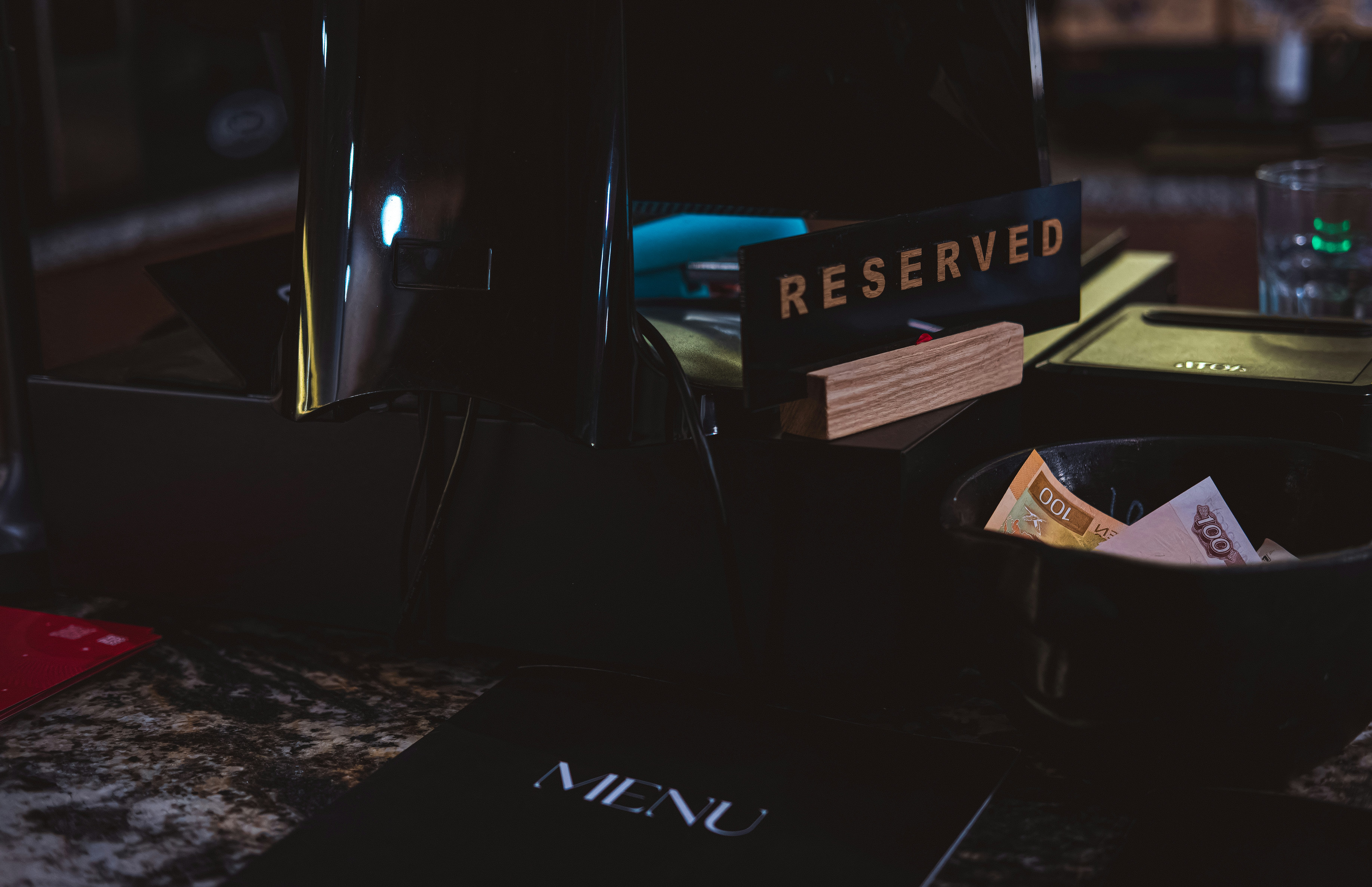
The menu is the most-touched brand object in your building. Every guest holds it. Most guests photograph it. Some guests read it before they arrive, on your website or on a table in a photo someone else posted to Instagram. And almost every restaurant in Texas Hill Country treats it like a formatting project.
It is not a formatting project. It is a brand project — one with direct effects on perceived price point, guest confidence, and ordering behavior. A menu that communicates care before a dish arrives is doing work that no amount of table decor or ambient lighting can replicate. A menu that looks like it was assembled in a hurry tells the guest something the kitchen can't un-tell them.
This guide covers every brand decision embedded in a menu, from logo placement to paper stock — with specific guidance for boutique restaurants operating in Gillespie County, Comal County, and Bell County, where the guest has usually driven a significant distance and arrived with high expectations.
"Pick up your current menu and ask: does this feel like it was made by the same people who built this restaurant? If the answer is uncertain, keep reading."
The Logo on the Menu: Placement, Size, and What It Sets Up
The logo on the menu cover is the first brand statement a guest reads. Before any food item, any description, any price — the logo tells them what kind of place this is. And it communicates that before they've tasted anything, which means it sets the expectation the kitchen has to meet.
Section Headers: How You Name Categories Changes Everything
Most restaurant menus use the same section headers they've used since the concept was typed up in a Word document. Appetizers. Entrees. Sides. Drinks. These words are not wrong. They are just not working for your brand. They are working for every other restaurant in your county — and they are the reason your menu doesn't communicate the same specificity as your food.
Section header language is a brand voice decision. Here is what that looks like in practice:
Neither column is categorically better. The right answer depends on your concept. A casual Hill Country smokehouse in Bell County might use "The Smoke Pit" as a section header and it would be exactly right. A refined wine country restaurant near Stonewall in Gillespie County might use "From the Cellar" and earn it. The question is not which words to use — it is whether you made the choice intentionally or accepted the default.
The test: read your section headers aloud. Do they sound like the person who built this restaurant? Do they sound like the same voice as your Instagram captions, your welcome letter, your website About page? If not, the menu is speaking in a different brand voice than everything else — and guests register that fragmentation even when they can't name it.
Typography on the Menu: The One Rule Most Restaurants Break
The font on your menu must match the font in your brand system. This is not a preference. It is a brand consistency rule, and it is the single most commonly violated one in Texas Hill Country restaurant design.
Most restaurant operators in Gillespie County and Comal County design their logo in one application (or hire someone to do it), establish a typeface, and then open their menu design in Canva or Word — which defaults to a completely different typeface. The menu gets designed in whatever fonts the template offers. The result is a document that communicates visually as a different brand than the sign on the building.
Here is the rule, stated simply: whatever typeface appears on your entry sign, your website headline, and your business card — that typeface must appear on your menu's section headers and, where appropriate, your menu cover. The body text can be a brand-approved companion typeface, but it should be specified, not improvised.
"Place your menu next to a screenshot of your website homepage. Do the typefaces match? If not — and they usually don't — that is the highest-ROI menu fix available to you, and it costs nothing but a reprint."
Pricing Format as Brand Signal
The way you display a price is a brand decision that almost no restaurant owner in Bell County or Comal County has made intentionally. It defaults to whatever the menu template does. But pricing format communicates something specific to every guest who reads it — and that communication happens before they've made a single ordering decision.
Hill Country Lamb ............ $32
Cast Iron Chicken ............ $26
Anchors the guest in price mode. The "$" symbol and the column of numbers becomes a ledger. Works well for value-driven concepts where transparency on cost is part of the brand promise.
Hill Country Lamb, salsa verde, pickled onion — 32
Cast Iron Chicken, beurre blanc — 26
Keeps the guest in experience mode. The price appears at the end of the description, after the food has been communicated. Removing the "$" reduces transaction anchoring. Strong for elevated Hill Country concepts.
Dinner, 95.
For prix fixe and tasting menu concepts only. Removes per-item pricing entirely. Communicates maximum confidence in the experience. Not appropriate for à la carte, but transformative for the right Gillespie County concept.
None of these formats is universally correct. Each is a brand decision that should be made based on who your guest is, what they expect to spend, and what kind of experience you want them to be in while they read the menu. The wrong choice — the à la carte smokehouse using a prix fixe format, or the refined wine country restaurant presenting prices in a bold dollar-sign column — sends a mixed signal that guests feel as dissonance.
Where the Sides and Drinks Live — and Why Placement Is a Brand Decision
Menu hierarchy — the order in which sections appear, the amount of space each gets, the visual weight assigned to each category — communicates what the restaurant believes its food is about. Most menus in Gillespie County and Bell County bury sides and drinks. They appear at the bottom, in smaller type, after everything else. This is a hierarchy decision that most operators made by default.
If your drinks program is a genuine part of your brand — locally sourced wines, Texas craft spirits, a house cocktail that uses Hill Country herbs — it deserves its own section, given visual prominence, and treated as a program rather than an afterthought. A wine country restaurant near Fredericksburg that buries its wine list in eight-point type at the bottom of the menu is making a brand hierarchy decision. It may not be the right one.
Similarly, sides deserve a brand decision. If your sides are sourced from your own garden or a local farm in Comal County, naming them specifically — "roasted Hill Country squash, preserved lemon" rather than "seasonal vegetable" — elevates the sides section into a brand statement. That specificity is what makes guests order them and mention them in reviews.
Paper, Cover, and Production: The Material Brand Decision
Paper weight communicates quality before a word is read. A guest who picks up a heavy, textured menu at a boutique restaurant near Johnson City in Gillespie County feels something before they open it. A guest who picks up a laminated menu printed on standard paper stock feels something different — and the gap between those two feelings is larger than most operators realize.
| Material | What It Communicates | Best for |
|---|---|---|
| Heavy uncoated paper (100lb+) | Intentionality, care, craft. The menu was designed, not just printed. | Wine country restaurants, elevated Hill Country concepts, boutique hotel dining rooms |
| Kraft / recycled stock | Casualness, sustainability, approachability. Works well when brand voice is warm and earthy. | Farm-to-table concepts, agritourism dining, casual outdoor restaurants in Bell County and Comal County |
| Leatherette or cloth cover | Durability and material investment. The menu is an object, not a document. Price point signal is high. | Refined dining rooms, hotel restaurants, concepts with $40+ average entrees |
| Natural wood clipboard | Casual, regional, unpretentious. Works when the brand voice is direct and the food is the whole story. | Smokehouse concepts, counter-service with table delivery, outdoor restaurants where lamination would look worse |
| Laminated / standard | Durability over brand. Communicates that the menu is a logistics document, not a brand object. Fine for high-volume, high-mess concepts — misaligned for boutique experiences. | Only when the concept's entire brand is built around speed and accessibility |
For boutique restaurants in Gillespie County and Comal County: the paper your menu is printed on should be specced the same way you'd spec a sign material or a uniform. It comes from the brand, not from what the printer stocks. If your brand is rooted in the Hill Country land — cedar, limestone, live oak, caliche — your menu material should come from that same reference point.
The menu brand audit checklist below covers all 18 decisions in this post in a single printable document. Use it with your current menu in hand.