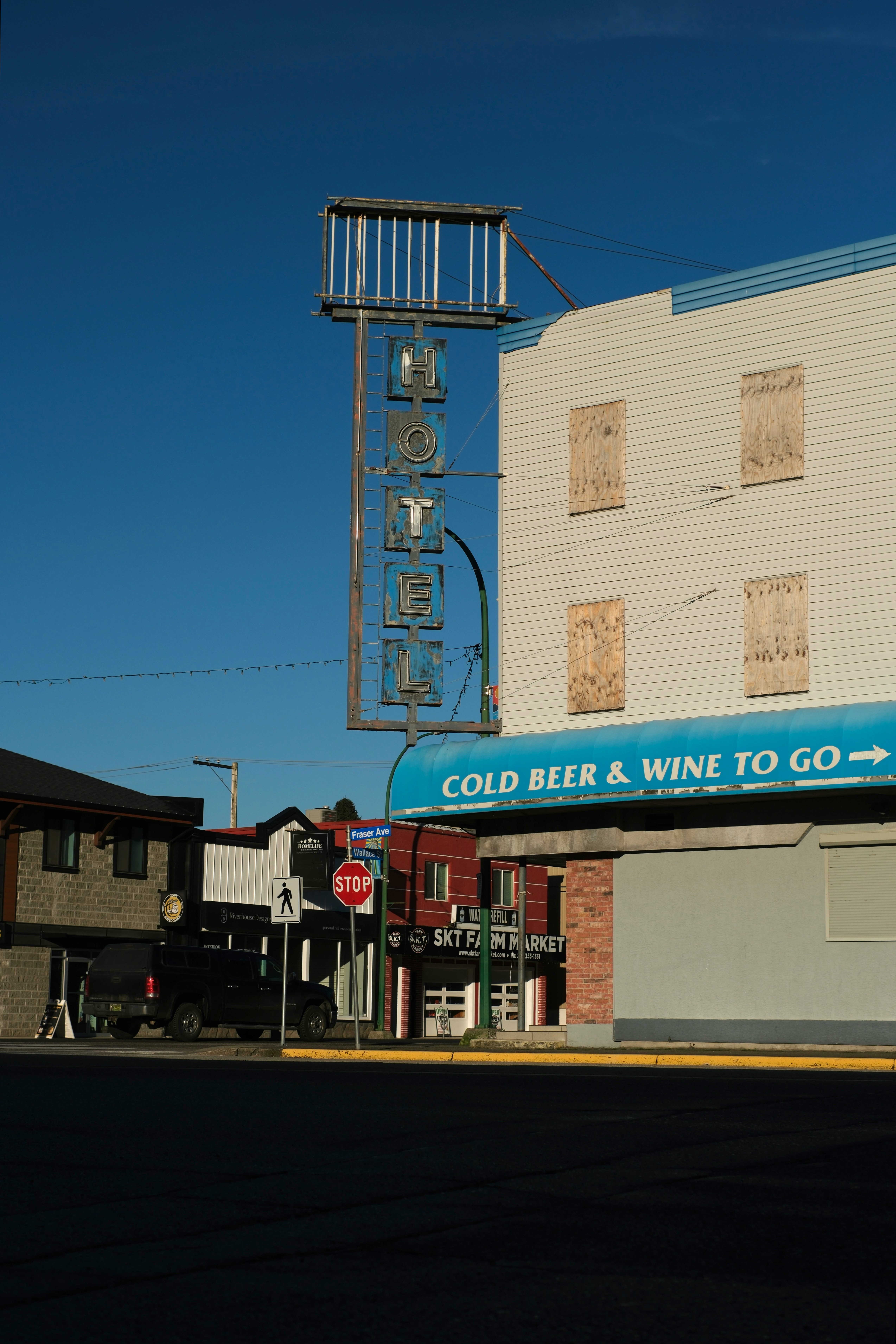
Most boutique property owners in the Texas Hill Country spend real money and real intention on their entry sign. The monument at the road gets considered. A fabricator gets called. A material gets chosen. And then a guest turns in off the highway, clears the entry — and immediately hits a handwritten cardboard sign taped to a fence post pointing toward the cabins.
That's wayfinding. And it's a brand problem, not a logistics problem.
Every directional sign, every cabin number plaque, every trail marker, every parking indicator on a boutique property in Gillespie County, Comal County, or Bell County is either carrying your brand identity forward or quietly undermining it. The moment a guest feels uncertain about where to go — the moment they have to guess, or backtrack, or ask someone a question that should have been answered by a sign — your brand loses a fraction of their trust. And that trust is the thing your rate is built on.
This post is a complete guide to wayfinding as a brand system: what it includes, what it communicates, how to audit it, and how to build it right.
"Properties in Gillespie County, Comal County, and Bell County are often spread across multiple acres. A guest arriving at a 40-acre ranch hotel in Blanco or a glamping resort near New Braunfels needs wayfinding more than a downtown hotel ever will — and they need it to feel like the same brand they booked."
What Wayfinding Actually Includes — Most Properties Miss Half of It
When most boutique property owners hear "wayfinding," they picture the directional sign at the fork in the driveway. Maybe a parking area marker. That's about 20 percent of a complete wayfinding system.
A full wayfinding system for a boutique ranch hotel, agritourism property, or Hill Country restaurant covers every moment a guest needs to know where they are or where to go next. Here's the complete scope:
The sign visible from the road — often on a county road or FM highway in Gillespie or Comal County — that tells a guest they've found the right turn. This is technically your second sign after the road signage you don't control. It needs to be visible at speed and readable at distance.
The primary arrival sign. Usually the most considered piece in the system — but even here, most properties miss the moment. The entry sign should confirm arrival and set the tone for everything that follows. Material, lighting, and scale are all brand decisions.
Where to park, where not to park, which lot is for guests vs. staff, overflow directions. These signs are almost always functional and almost never branded. The font on your parking sign is a brand decision — whether you made it or not.
The signs that move a guest from parking to check-in, from check-in to their cabin, from their cabin to the dining room, event space, pool, or fire pit. This is where most agritourism properties in Bell County and Gillespie County have the largest gaps. These signs often exist, but they don't match each other — different materials, different fonts, different mounting heights.
The number or name on the door, post, or fence of each guest space. Most properties use a generic engraved number plate or painted number. Branded cabin identification — using your typeface, your material palette, your naming system — is one of the highest-ROI physical brand upgrades available.
For ranch properties and agritourism spaces across Comal County and beyond: trail markers, creek path indicators, field boundary signs, fire pit location markers. Outdoor properties in the Hill Country have more wayfinding real estate than almost any other hospitality category — and almost none of it is ever branded.
Where to leave keys, where to exit, checkout instructions on property. This is the last physical brand moment before a guest drives away. It's the last thing they see. Most properties leave this moment entirely undesigned.
How Wayfinding Communicates Brand — Even When It's "Just a Sign"
Here's the thing about wayfinding that most property owners in Gillespie County and Bell County miss: there is no such thing as a neutral sign. Every directional marker is making a brand statement whether you designed it or not. A hand-lettered paper sign taped to a post says something. A plastic sign-shop generic says something. A routed cedar post with your brand typeface and your brand palette says something entirely different.
Let's be specific about the decisions embedded in every wayfinding sign:
Font choice is a brand decision
The typeface on your parking sign should be the same typeface family as your entry monument, your menu, your welcome letter, and your website. If your brand uses a specific display serif for headlines and a clean sans-serif for body, your wayfinding should use those typefaces — not whatever the sign shop had available. When a guest sees different fonts across different signs on your property in New Braunfels or Fredericksburg, their brain registers inconsistency before they can name it.
Material is a brand decision
If your entry sign is routed cedar, your cabin identification signs should be routed cedar. If your entry sign is Cor-Ten steel, your trail markers should be Cor-Ten steel. Material consistency across a wayfinding system is what makes a property in Comal County feel like one intentional place rather than a collection of objects that happened to be installed on the same acreage.
Copy tone is a brand decision
This is the most overlooked one. The language on your signs is brand voice in the physical world. Consider the difference:
- "Trail Head →" — functional, generic, could be anywhere
- "The Juniper Walk →" — named, specific, belongs to this property
- "Follow the Creek →" — warm, inviting, speaks in the property's voice
Any of these might be right for a specific property — but the choice is a brand decision that should be made intentionally, not by default. For boutique properties in Bell County and Gillespie County competing in an increasingly crowded agritourism market, copy tone on wayfinding signs is a small decision with an outsized effect on the guest experience.
"Walk from your entry sign to your farthest cabin. Count every sign you pass. How many use your brand typeface? How many match your brand's material palette? How many sound like your brand's voice? That number — expressed as a fraction — is your wayfinding brand score."
A Case for Branded Place Names on Texas Hill Country Properties
There is a specific brand decision that boutique properties in Gillespie County, Comal County, and Bell County consistently make by default rather than by intention — and it is costing them social media traction, review specificity, and the kind of emotional attachment that creates repeat guests.
That decision is whether to number your spaces or name them.
Named spaces do four things that numbered spaces can't:
They create brand memory. A guest who stayed in "The Ridge Cabin" remembers it. A guest who stayed in "Cabin 3" remembers a number. When they recommend your property in Fredericksburg or Johnson City to a friend, they say "ask for the Ridge Cabin" — which is a more compelling recommendation than "ask for Cabin 3."
They generate tagged social content. Instagram posts from agritourism properties in Gillespie County that have named spaces consistently outperform those that don't, because guests have something specific to reference. "Woke up in The Cedar Room" is a caption. "Woke up in Room 2" is not.
They increase review specificity. A Google review that names a specific space on your property — "We stayed in the Creekside Cabin and it was exactly what we needed" — is more credible and more useful to future guests than a generic review. Named spaces make this happen naturally.
They embed the property's identity in the physical world. A Hill Country property that names its spaces after local geography — cedar, limestone, creek, juniper, live oak, caliche — is telling a story about the land in every sign. That story is part of the brand. It's part of why guests in Comal County or Bell County drove three hours to be there.
The Wayfinding Audit: Walk Your Property Like a First-Time Guest
The most useful thing you can do with this post is close it and go outside. The exercise below takes thirty minutes and will tell you more about your wayfinding system than any checklist can.
Park at the road. Approach your property as if you've never been there. Move through the entire arrival sequence — from the highway turn-in to your farthest guest space — and document every moment you answer any of the following questions:
The gaps you find are your priority list. Start with the highest-friction moments — the places where a guest would most likely feel lost or see an inconsistency. Those cost you the most in perceived value.
If you run this exercise at a property in Gillespie County — a working ranch hotel near Fredericksburg, a wine country stay near Stonewall — you will almost always find the same pattern: the entry is considered, everything after it is improvised. The property walk reveals this clearly. And once you've seen it, you can't unsee it.
Spec Standards for Wayfinding Consistency
Once you've completed the property walk and identified your gaps, the temptation is to go sign shopping. Don't. Before you order a single sign, establish your wayfinding spec standards — the rules that will keep every new sign consistent with every existing one, now and in the future.
These are not design preferences. They are brand protection rules. Without them, every new sign becomes a judgment call made by whoever is ordering it — which means over time, your wayfinding system drifts into the same fragmented state most properties in Bell County and Comal County are already in.
| Element | The Rule | Why It Matters |
|---|---|---|
| Typography | Use only typefaces specified in your brand guidelines. If you don't have brand guidelines yet, the typeface on your entry sign is the standard everything else must match. | Font inconsistency is the most visible brand fragmentation signal to guests — even those who couldn't tell you why something feels off. |
| Color | Use only colors from your named palette — with PMS values for fabrication. Never match by eye or by digital hex code alone. | Color drift across sign fabrication batches is cumulative. Each round of new signs gets slightly more wrong. PMS stops the drift. |
| Material | Match the primary material of your entry sign system. If entry is routed cedar, wayfinding is routed cedar. One material system across the entire property. | Material inconsistency communicates that different parts of the property were designed at different times by different people with no shared standard. |
| Copy Tone | All sign copy must pass the brand voice test: does it sound like the person who built this property? Functional language is fine — but it should still sound like yours. | Copy tone on wayfinding is brand voice in the physical world. "Restrooms" vs. "Wash Up" vs. "The Facilities" are three different brands. |
| Scale & Height | Establish a standard height and scale for each sign type — entry, directional, cabin ID, trail marker — and document it. Every future sign must match. | Inconsistent scale and mounting height creates visual noise that reads as disorganization. Uniform scale creates calm and confidence. |
| Fabricator Brief | Every sign order goes out with a written brief: typeface files, PMS values, material spec, copy in final form, and a scaled drawing. No verbal orders. | Sign fabricators build what they're given. Without a brief, they make judgment calls. A brief transfers those decisions back to you. |
For boutique properties in Gillespie County that are actively building or expanding — new cabins, new event spaces, new trail systems — getting these standards documented now is far easier than reconciling three years of inconsistent sign orders later. The spec document takes a few hours to write. The alternative is a property walk in 2028 that finds twice as many gaps.
"Every sign you add without a brief is a future inconsistency. Every sign you add with a brief is a brand deposit. The properties in Bell County and Comal County that will have the strongest physical brand in five years are the ones documenting their standards today."
The free download below includes the Exterior Signage Brief Template — the same document we use to brief fabricators for properties across Texas. It covers every spec element in the table above, formatted for vendor use from day one.